

How to Get to Nepal: Flights, Borders &Visa Guide
Planning a trip to Nepal and wondering how to get to Nepal from your country? For most international travelers, flying to Kathmandu is the easiest and most convenient option. Tribhuvan International Airport (KTM) is Nepal's main international gateway, connecting the country with major cities across Asia and beyond.
Travelers coming from India have more options. You can fly to Nepal, travel overland through one of several India–Nepal border crossings, or combine an Indian train journey with road transportation. Travelers arriving from Tibet can also enter Nepal through designated border routes, subject to current border and permit requirements.
But reaching Nepal is only the first part of the journey. Once you arrive in Kathmandu, you'll need to decide how to reach your next destination. Pokhara, Chitwan, Lukla, Everest, Muktinath, and Gosaikunda can be reached by different combinations of domestic flights, road travel, trekking, and helicopter flights.
This guide explains the main ways to travel to Nepal, what each option is best for, Nepal's visa and entry requirements, major land routes, and how to continue your journey after arriving in Kathmandu.
Quick Answer: How Do You Get to Nepal?
For most travelers, the simplest way to get to Nepal is to book an international flight to Kathmandu's Tribhuvan International Airport. If you're traveling from India, an overland journey can be a practical alternative, with several official border crossings connecting the two countries.
Your best option depends on your starting point, budget, travel time, and final destination.
Once you're in Kathmandu, you can continue toward Nepal's major destinations by domestic flight, road, trekking route, or helicopter. Choosing the right option can save significant time, particularly when traveling toward remote Himalayan areas.
Quick takeaway: Fly to Kathmandu if you're coming from overseas; consider an overland route if you're already in India; and plan your onward transportation based on your destination and available time.
How to Get to Nepal by Air
For travelers coming from outside South Asia, flying to Nepal is usually the simplest way to begin your trip. Most international flights arrive at Tribhuvan International Airport (KTM) in Kathmandu, the country's primary international gateway.
Kathmandu is also the main starting point for many Nepal itineraries. After landing, travelers can continue to Pokhara, Chitwan, Lukla, or other destinations by domestic flight, road, trekking routes, or helicopter.
Tribhuvan International Airport (KTM)
Tribhuvan International Airport is located in Kathmandu and handles Nepal's international and domestic air traffic. If you're searching for international flights to Nepal, Kathmandu is the airport you will most commonly find on flight schedules.
The airport has separate international and domestic operations, making it possible to connect to domestic destinations after completing immigration and collecting your baggage.
For first-time visitors, it is worth allowing enough time between international and domestic flights. Immigration, baggage collection, customs, and domestic check-in can all take time, particularly during busy travel periods.
Where Can You Fly to Nepal From?
There are no direct flights from every country to Nepal, so many travelers reach Kathmandu through major international hubs. Depending on your departure city, common connecting points can include cities in:
- India and South Asia
- The Middle East
- Southeast Asia
- East Asia
- Europe
The best route depends on your departure city, airline availability, travel dates, baggage allowance, and connection time. Rather than choosing a flight based only on the lowest fare, compare the total journey time, number of connections, and layover duration.
How to Choose the Best Flight to Nepal
When booking your flight to Nepal, consider more than the ticket price. A slightly more expensive itinerary with one convenient connection can save several hours compared with multiple long layovers.
Before booking, check:
- Total travel time
- Number of connections
- Baggage allowance
- Layover duration
- Arrival time in Kathmandu
- Change and cancellation conditions
- Seasonal airfare differences
If you plan to continue directly toward the mountains after arriving in Kathmandu, also consider your onward transportation when choosing your arrival time.
Planning to explore the Himalayas after arriving in Nepal? Once you're in Kathmandu, you can choose between trekking, domestic flights, road travel, and helicopter options depending on your destination and schedule. Explore our helicopter tours in Nepal for routes to some of the country's most popular Himalayan destinations.
How to Get to Nepal from India
Traveling from India to Nepal is relatively straightforward, with three main options: flying, crossing the border by road, or combining an Indian train with road transportation. The best choice depends on your starting point, budget, and available time.
By Flight
Flying is the fastest option for travelers who want to reach Kathmandu from India without a long overland journey. Depending on current airline schedules, international flights to Kathmandu can be available from major Indian cities such as Delhi, Mumbai, Bengaluru, Kolkata, and Varanasi.
Choose a flight if your priority is saving time or connecting quickly to a trekking or mountain itinerary.
By Road
Overland travel is a practical choice if you're already in northern India or want to include Nepal as part of a wider South Asia road trip.
Common India–Nepal border crossings include:
Border locations and entry procedures can change, so check Nepal's official land-entry information before departure.
Foreign travelers must complete the applicable immigration and visa formalities when entering Nepal. Border procedures and transport availability can change, so check current requirements before departure.
By Train + Road
Nepal does not have a direct long-distance international railway connecting major Indian cities with Kathmandu. Instead, travelers can take an Indian train to a city near the Nepal border and continue by road.
Depending on the route, useful railway points can include Gorakhpur, Raxaul, Jogbani, and New Jalpaiguri.
This option can suit budget travelers who have more time, but it usually involves more transfers than flying.
Which India–Nepal Option Should You Choose?
- Choose a flight if you want the fastest and simplest journey.
- Choose road travel if you're already near the Nepal border or taking a wider road trip.
- Choose train + road if keeping transportation costs down is more important than saving time.
Your final destination also matters. Someone heading directly to Kathmandu may choose differently from a traveler entering through southern Nepal before continuing to Pokhara, Chitwan, or another destination.
Can You Get to Nepal by Train?
Not directly to Kathmandu. Nepal does not currently have a direct long-distance international train connecting Kathmandu with major Indian cities.
However, you can combine Indian train travel with a road journey. Take a train toward a city near the Nepal border, then continue through an official land crossing.
This can be a good choice for travelers who are already exploring India and have more time. If speed is your priority, flying to Kathmandu is usually simpler.
For specific India–Nepal train and border options, see the route comparison above.
Can You Drive to Nepal?
Yes. Travelers can drive to Nepal through designated international land borders, particularly from India. Driving can be useful for road trips or travelers who want flexibility over their schedule and stops.
Driving from India
If you're bringing a vehicle across the border, you'll need to complete the applicable customs and vehicle-entry formalities. Carry your passport, vehicle registration documents, driving license, and any other documents required for your nationality and vehicle.
Entry requirements can differ between Indian citizens and foreign travelers, so confirm the current rules before departure.
Driving from Tibet or China
Overland travel from Tibet into Nepal is subject to border operations, permits, road conditions, and current travel regulations. Private vehicle travel can involve additional restrictions and arrangements.
If you're planning this route, confirm the requirements with your tour operator and the relevant authorities before traveling.
Is Driving a Good Option?
Driving makes the most sense if you're already traveling through India or planning a wider South Asian road trip. For travelers coming from distant regions, flying to Kathmandu is generally more practical.
Can You Enter Nepal from Tibet or China?
Yes, travelers can enter Nepal from Tibet, but overland travel between Tibet and Nepal is more regulated than the India–Nepal route. Travelers generally need to arrange the required permits and follow the conditions set for their Tibet itinerary before reaching the Nepal border.
Two routes commonly associated with Tibet–Nepal travel are the Kerung–Rasuwagadhi crossing and the Zhangmu–Tatopani route. Which crossing you can use depends on current border operations, permits, road conditions, and your travel arrangements.
Kerung–Rasuwagadhi Border
The Kerung–Rasuwagadhi border is an important overland connection between Tibet and Nepal. It is particularly relevant for travelers following a Tibet–Nepal tour itinerary.
Travelers should arrange the required Tibet permits and transportation through an authorized arrangement before starting the journey, as independent travel conditions can differ from normal international tourism.
Zhangmu–Tatopani Border
The Zhangmu–Tatopani route connects southern Tibet with Nepal and provides another historic overland gateway. Availability and crossing procedures can vary, so travelers should confirm the latest conditions before planning their route.
What to Know Before Traveling
Traveling from Tibet into Nepal normally involves more planning than a standard international flight. Depending on your itinerary and nationality, you may need:
- Appropriate Tibet travel arrangements and permits
- The required Nepal entry documents
- An organized or approved travel arrangement where applicable
- Transportation to and from the border
- Confirmation that the chosen border crossing is operating for your intended travel date
Border conditions and regulations can change, so confirm the latest requirements before departure.
Important: Do not assume that a border crossing is open or that the same entry procedure applies to every nationality. Check the current requirements before planning your route.
Nepal Visa &Entry Requirements
Most foreign tourists need a Nepal tourist visa, although requirements vary by nationality. Many eligible travelers can obtain a visa on arrival at Tribhuvan International Airport in Kathmandu and designated land entry points.
Nepal Tourist Visa on Arrival
For eligible travelers, the general process is:
- Complete the visa application or online form as required.
- Pay the applicable visa fee.
- Proceed to immigration with your passport and supporting documents.
- Receive your visa and enter Nepal.
Current Tourist Visa Fees
Visa fees and eligibility can change, so verify the latest information with Nepal's Department of Immigration before traveling.
Passport Requirements
Your passport should meet Nepal's current validity requirements. Travelers should also have enough blank pages for immigration stamps and keep copies of important travel documents.
Who Cannot Get a Visa on Arrival?
Visa-on-arrival availability is not universal for every nationality. Nepal's Department of Immigration currently lists several nationalities that must obtain a visa in advance rather than receiving one on arrival. Check the official immigration information before booking your journey if you're unsure about your eligibility.
The current official TIA Immigration FAQ identifies the nationalities that are not eligible for visa on arrival.
Important: Visa fees, application procedures, and entry rules can change. Before traveling, verify the latest Nepal visa requirements directly with the Department of Immigration or the nearest Nepali diplomatic mission.
What Happens After You Arrive at Kathmandu Airport?
Once you land at Tribhuvan International Airport (KTM), the arrival process is straightforward. Allow some time for immigration, baggage collection, customs, and your onward transfer—especially if you're connecting to a domestic flight.
1. Complete Immigration
Follow the signs to immigration after leaving the aircraft. If you're eligible for a Nepal visa on arrival, complete the required application and payment process before joining the immigration queue.
Keep your passport and travel documents easily accessible.
2. Collect Your Baggage
After immigration, proceed to the baggage reclaim area and check the airport screens for your flight's assigned carousel.
If your luggage is delayed or missing, contact your airline's baggage service desk before leaving the airport.
3. Pass Through Customs
Once you have your luggage, follow the signs to customs. Declare any items required by Nepal's current customs rules and keep relevant receipts or documents available if requested.
4. Arrange Your Airport Transfer
After exiting the terminal, you can continue into Kathmandu by taxi, private airport transfer, or hotel pickup.
If your hotel or tour operator is collecting you, confirm the meeting point before your flight so you know where to go after clearing customs.
5. Continue to Your Next Destination
Kathmandu is the main gateway for traveling onward to destinations such as Pokhara, Chitwan, Lukla, Muktinath, and Gosaikunda.
Depending on your itinerary, you can continue by domestic flight, road, trekking route, or helicopter. If you have a tight schedule, leave enough time between your international arrival and any onward mountain flight because delays can occur.
Tip: If you're connecting to a domestic flight, avoid making the connection too tight. Immigration, baggage collection, and airport transfers can take longer during busy periods.
How to Get Around Nepal After You Arrive
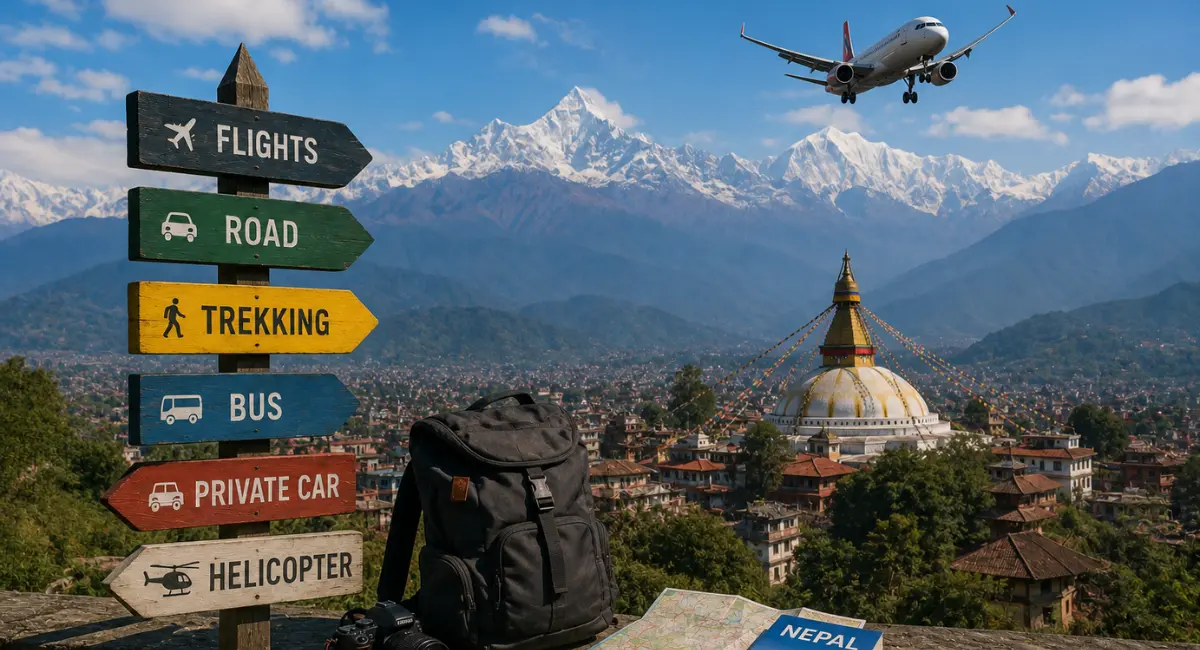
Getting to Nepal is only the beginning. Once you arrive in Kathmandu, the best way to travel around Nepal depends on your destination, budget, available time, and how much of the journey you want to experience on the road.
For major cities and tourist destinations, you can choose between domestic flights, buses, private vehicles, and taxis. For remote Himalayan areas, trekking and helicopter travel in Nepal can offer more practical alternatives.
Domestic Flights
Domestic flights are one of the most convenient ways to travel between Kathmandu and major destinations such as Pokhara, Lukla, Bharatpur, and Nepalgunj.
They are particularly useful when you're working with a limited itinerary. However, mountain flights can be affected by weather, visibility, and airport operating conditions, so it's wise to keep some flexibility in your schedule.
Tourist Buses
For travelers with more time, tourist buses in Nepal connect Kathmandu with destinations such as Pokhara, Chitwan, and other popular routes.
Road travel is generally more affordable than flying, but journey times can vary considerably because of traffic, road conditions, weather, and construction.
Private Vehicles
A private car or jeep gives you greater flexibility over departure times and stops. This can be especially useful for families, small groups, and travelers visiting destinations that are not conveniently served by domestic flights.
Trekking
Some of Nepal's most famous destinations are reached primarily on foot. The Everest Base Camp trek, Annapurna routes, Langtang, and other Himalayan trails require travelers to combine transportation with several days of trekking.
For visitors who want the full mountain experience, trekking is often part of the adventure rather than simply a means of transportation.
Helicopter Travel
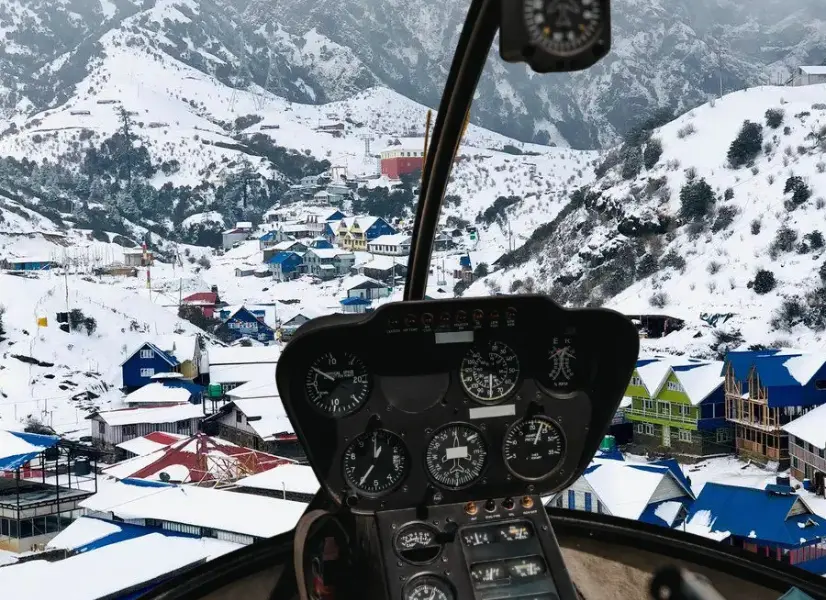
For travelers with limited time or those heading toward remote Himalayan destinations, helicopter tours in Nepal offer a faster alternative to long road journeys and trekking approaches.
Depending on the route and operating conditions, helicopter flights can provide sightseeing, landing experiences, or direct access to destinations such as Everest Base Camp, Gosaikunda, Annapurna Base Camp, and Muktinath.
If you're comparing different ways to explore Nepal's mountains, you can explore our helicopter tours in Nepal to see available routes, itineraries, and travel options.
How to Get from Kathmandu to Major Destinations
Kathmandu is Nepal's main transportation hub, so many travelers begin their journey here. The best way to continue depends on your destination and how much time you have.
Kathmandu to Pokhara
Flying is the fastest option, while road travel is generally more economical and allows you to see more of the landscape along the way. Pokhara is also a popular gateway to the Annapurna region, including trips such as an Annapurna Base Camp helicopter tour.
Kathmandu to Chitwan
Most travelers reach Chitwan by road, although flights to Bharatpur can provide a faster alternative. Chitwan is best known for its jungle safari, wildlife, and nature experiences, making it a good contrast to Nepal's mountain destinations.
Kathmandu to Lukla
Travelers beginning the Everest Base Camp trek commonly use a domestic flight to Lukla, followed by trekking.Helicopter flights are another option for travelers looking to reduce travel time or reach the Everest region with greater flexibility, including an Everest Base Camp helicopter tour.
Kathmandu to Muktinath
Muktinath can be reached through a combination of flight and road travel, overland transportation, or helicopter, depending on your itinerary and budget. Muktinath can be reached through a combination of flight and road travel, overland transportation, or a Muktinath helicopter tour, depending on your itinerary and budget.
Kathmandu to Gosaikunda
Gosaikunda is accessible through road-and-trekking routes as well as a Gosaikunda helicopter tour.
Planning a short trip? Compare the total travel time, not just the ticket price. Faster transportation can allow you to spend more time at your destination.
How Much Does It Cost to Get to Nepal?
The cost of traveling to Nepal depends on your departure country, travel season, transportation, and how much you plan to travel after arrival. For most visitors, the main expenses are international transportation, visa fees, accommodation, and onward travel within Nepal.
International Flight to Nepal
For travelers arriving from outside South Asia, the international flight to Kathmandu is usually the largest arrival expense.
Airfares vary according to:
- Departure city
- Travel dates
- Airline
- Number of connections
- Baggage allowance
- Booking time
Compare the total journey cost, not just the advertised ticket price. A cheaper flight with long layovers, additional baggage fees, or an overnight connection may not provide better value.
Traveling from India
If you're traveling from India to Nepal, your transportation cost depends on whether you fly, cross the border by road, or combine train and road travel.
Your starting city and chosen border crossing can make a significant difference to the overall cost.
Nepal Tourist Visa
Eligible foreign travelers should also include the Nepal tourist visa fee in their budget:
Visa fees and entry requirements can change, so verify the latest information before traveling.
Costs After You Arrive
Getting to Nepal is only part of your travel budget. Depending on your itinerary, you may also need to budget for:
- Airport transfer
- Accommodation
- Domestic flights
- Tourist buses or private vehicles
- Trekking transportation
- Permits and trekking services
- Helicopter tours or transfer
- Travel insurance
If you're visiting remote Himalayan destinations, transportation can become a significant part of your budget. A more expensive option may sometimes save several hours or days of travel.
How to Plan Your Budget
Start with your international transportation and visa, then add accommodation and the transportation required for your specific itinerary.
For a short Nepal trip, spending more on faster transportation can sometimes provide better value than choosing the cheapest available route.
What Is the Cheapest Way to Get to Nepal?
The cheapest way to get to Nepal depends on where you're starting.
From Outside South Asia
For travelers coming from Europe, North America, Australia, or other distant regions, flying is generally the practical option. To reduce the cost, compare different travel dates, connecting cities, baggage allowances, and airlines rather than choosing the first fare you see.
From India
Travelers already in India have more options. Road travel or train + road can be cheaper than flying, particularly when you're close to the Nepal border and have enough time for the journey.
Cheapest vs. Best Value
The lowest price isn't always the best choice.
If you have only a few days in Nepal, a faster flight may give you more useful time at your destination. Similarly, travelers heading into the Himalayas may choose faster transportation when avoiding long road journeys is more important than minimizing cost.
Best approach: compare the total transportation cost with the time required, then choose the option that fits your itinerary.
What Is the Best Time to Travel to Nepal?
The best time to travel to Nepal depends on what you want to do. For clear mountain views, comfortable trekking conditions, and generally favorable travel weather, spring and autumn are the most popular seasons.
However, each season offers a different experience, and weather can also affect domestic flights, road journeys, and helicopter operations.
Spring — March to May
Spring is one of the best seasons for traveling to Nepal, particularly for trekking and mountain sightseeing. Temperatures are generally comfortable, and the hills become vibrant with blooming rhododendrons.
It is also a popular period for Himalayan flights and helicopter tours, so booking important transportation in advance is recommended.
Summer and Monsoon — June to August
The Nepal monsoon season brings frequent rainfall, especially in lower elevations. Rain can affect road conditions and may cause delays or cancellations on some domestic and mountain flights.
Travel is still possible, particularly in rain-shadow areas such as parts of Mustang, but travelers should keep their itinerary flexible.
Autumn — September to November
Autumn is widely considered one of the best seasons to visit Nepal. After the monsoon, skies are often clearer, mountain visibility improves, and conditions are favorable for trekking and sightseeing.
Because it is also one of Nepal's busiest travel periods, flights, hotels, trekking services, and popular helicopter tours can experience high demand.
Winter — December to February
Winter brings colder temperatures, especially at higher elevations, but lower-altitude destinations remain accessible. Mountain views can be excellent on clear days, although snowfall and cold weather can affect some high-altitude routes.
For travelers planning mountain flights or helicopter tours in Nepal, it's also useful to understand the best time to fly in Nepal before finalizing your itinerary
Which Season Should You Choose?
For most travelers, spring and autumn offer the best combination of weather and accessibility. If your priority is trekking or Himalayan sightseeing, autumn is particularly popular. For lower costs and fewer crowds, the shoulder seasons can be worth considering.
Whatever season you choose, allow some flexibility in your itinerary. Nepal's weather can change quickly, especially in mountainous areas, and transportation schedules may be affected.
How Far in Advance Should You Book Your Trip to Nepal?
How early you should book depends on your destination, travel season, and how fixed your itinerary is.
International Flights
For international flights to Nepal, booking several weeks or months ahead generally gives you more choice of flight times, connections, and fares.
During busy spring and autumn periods, booking earlier is especially useful if your travel dates are fixed.
Hotels & Domestic Flights
Accommodation in Kathmandu and Pokhara is available across a wide range of budgets, but popular properties can fill quickly during peak trekking seasons.
Domestic flights to destinations such as Lukla can also be in high demand during trekking periods. If your itinerary depends on a specific flight, arrange it before the rest of your schedule becomes too tight.
Trekking & Mountain Tours
Popular trekking routes may require advance arrangements for guides, permits, accommodation, and transportation, particularly during peak season.
The same applies to helicopter tours in Nepal when you need a specific date or private charter.
If Your Dates Are Flexible
Flexible travelers have more options. You can compare different flight dates, avoid peak periods, and adjust your itinerary around availability.
For mountain travel, however, avoid creating an itinerary with no buffer. Weather-related delays can affect flights, roads, and helicopter operations.
What Should You Prepare Before Traveling to Nepal?
A little preparation can make arriving in Nepal much easier. Before departure, use this quick checklist.
Documents
- Check that your passport meets Nepal's current validity requirements.
- Confirm your visa or visa-on-arrival eligibility.
- Save copies of your passport, visa, flight tickets, hotel bookings, and travel insurance.
- Keep important documents accessible during your journey.
Money & Payments
Carry some Nepali rupees for smaller purchases and transportation. International cards are accepted in many hotels, restaurants, and businesses in major tourist areas, but cash can be useful outside the main cities.
Clothing & Gear
Pack according to your itinerary and season. If you're visiting the Himalayas, bring appropriate layers, comfortable walking shoes, and weather-resistant clothing.
You don't need heavy mountain gear for every Nepal trip—your packing list should match your altitude, destination, and activities.
Connectivity
Consider arranging a local SIM card or eSIM if you need reliable mobile data. Download important maps, booking confirmations, and travel information before leaving areas with reliable internet access.
Transportation
Confirm your airport transfer and any important domestic flights before departure. If your itinerary includes mountain flights or helicopter travel, leave some flexibility for weather-related delays.
Final Check
Before leaving home, confirm:
Passport ✓ Visa ✓ Flights ✓ Accommodation ✓ Insurance ✓ Money ✓ Transportation ✓ Essential gear ✓
Once these are ready, you'll be much better prepared for your arrival in Nepal.
Frequently Asked Questions About Getting to Nepal
Is Nepal easy to travel to for first-time visitors?
Yes. For most international travelers, arriving in Nepal is straightforward. Kathmandu's Tribhuvan International Airport is the country's main international gateway, while travelers from India can also enter through designated land borders.
Do I need a visa to enter Nepal?
Most foreign travelers need a Nepal tourist visa, although requirements vary by nationality. Eligible travelers can generally obtain a visa on arrival at Kathmandu airport and designated land entry points. Always check the latest requirements before traveling.
Can I enter Nepal from India by land?
Yes. Travelers can enter Nepal from India through designated international land borders. This can be a convenient option if you're already traveling through northern India or planning a wider South Asia itinerary.
Can I enter Nepal from Tibet?
Yes, but Tibet–Nepal travel involves additional planning and may require permits or organized travel arrangements depending on your itinerary and nationality. Border operations can also change, so confirm current conditions before departure.
Is there a direct train from India to Kathmandu?
No. Travelers can combine an Indian train with road transportation to reach Nepal, but there is no direct long-distance international train connecting major Indian cities with Kathmandu.
What is the fastest way to reach Nepal?
For travelers coming from outside neighboring countries, flying to Kathmandu is generally the fastest and simplest option. Travelers already in India may also find flights more convenient than overland routes when time is limited.
How do I get from Kathmandu to Everest?
Most Everest Base Camp trekkers travel from Kathmandu toward Lukla and then continue on foot. Helicopter flights are another option for travelers who want a faster journey or have limited time.
Can I travel around Nepal without a private vehicle?
Yes. Nepal has domestic flights, tourist buses, local transportation, private vehicles, trekking routes, and helicopter services. The best option depends on your destination, budget, and available time.
What is the best month to visit Nepal?
There is no single best month for every traveler. March–May and September–November are generally popular for trekking, mountain views, and outdoor travel, while other seasons can suit travelers with different priorities.
How much time should I allow for traveling around Nepal?
It depends on your itinerary. A short trip can focus on Kathmandu and one nearby destination, while two or more weeks gives you more flexibility to combine cities, wildlife areas, and Himalayan destinations without rushing.
Should I book domestic flights in advance?
If your itinerary depends on a specific domestic flight—particularly during busy trekking seasons—booking ahead is sensible. Leave some flexibility because weather can affect mountain flights and other transportation.
Is helicopter travel a good option in Nepal?
Helicopter travel can be useful when you're short on time or traveling to remote Himalayan destinations. It can reduce lengthy road or trekking journeys, although it generally costs more than conventional transportation.
Final Takeaway: Plan Your Route Before You Arrive
For most international travelers, flying to Kathmandu is the simplest way to begin a trip to Nepal. Travelers coming from India have the added flexibility of road and train-and-road routes, while those arriving from Tibet can use designated overland crossings subject to current requirements.
Once you arrive, your choice of transportation depends on where you're heading. Domestic flights, road travel, and trekking work well for many destinations, while helicopter travel can be a practical option when you have limited time or want direct access to selected Himalayan locations.
If you're planning to explore Everest, Annapurna, Muktinath, Gosaikunda, or other mountain destinations, choosing the right transportation before your trip can save valuable time and make your itinerary much easier to manage.
Explore Go Heli Services' helicopter tours in Nepal to compare available mountain routes, sightseeing flights, and landing experiences for your Nepal adventure.
Plan your arrival. Choose your route. Make the most of your time in Nepal.

Go Heli Services