

Quick Answer
You can reach Lukla in three ways — fixed-wing flight from Kathmandu ($190-220, 30-40 min, high cancellation risk in afternoons), fixed-wing flight from Ramechhap ($180-200, 5-7 hours total including bus ride, medium reliability), or helicopter from Kathmandu ($500-650 shared, 45-50 min direct, high reliability). Helicopter is the only option that departs directly from Kathmandu year-round, bypasses the 2 AM bus to Ramechhap during peak season, and can operate in marginal weather conditions that ground planes. For trekkers on a tight schedule, in groups of 3+, or arriving during peak season, helicopter is the most reliable way to reach Lukla.
Every Everest Base Camp trek starts at the same place: Tenzing-Hillary Airport in Lukla, 2,845 meters above sea level, perched on a mountainside with a 527-meter sloping runway and no instrument landing system. Getting there is the first challenge.
Over 50,000 travelers fly this route every year. In peak season, the bottleneck at Lukla strands trekkers for days — not because they are unfit or unprepared, but because the airport itself has hard limits on how many flights can land and in what conditions. The flight itself is only 30-40 minutes. The wait can be days.
This guide compares every option to reach Lukla in 2026 — the costs, the reliability, the hidden logistics — so you can choose the right one and start your Everest journey without a delay.
Tenzing-Hillary Airport Lukla sloping runway aerial view at 2845 meters Tenzing-Hillary Airport’s 527-meter sloping runway at 2,845 meters — built in 1964 by Sir Edmund Hillary.
Bottom line: If you want certainty, a helicopter from Kathmandu is the only option that guarantees same-day arrival without a bus transfer.
Why Is Getting to Lukla So Difficult?
Lukla Airport was built in 1964 with help from Sir Edmund Hillary, carved into a hillside at 2,845 meters. The runway is 527 meters long. Most international runways are 3,000 to 4,000 meters. It is a single-lane asphalt strip on an incline. Every landing is uphill. Every takeoff is downhill. Pilots train specifically for this approach — there is no room for error.
Flights operate under Visual Flight Rules only. The pilot needs to see the runway to land. Instruments cannot guide the aircraft in. The moment clouds roll in, winds shift, or visibility drops below 5 kilometers, every fixed-wing flight is grounded. This makes Lukla one of the most challenging commercial airports in the world — consistently ranked among the most dangerous by aviation authorities (Tenzing-Hillary Airport profile).
This happens often. In peak spring 2026, fixed-wing afternoon flights to Lukla had roughly a 40% cancellation rate on windy days. Morning flights are more reliable — the valley is calmest before 8 AM — but the backlog from a single cancelled afternoon can take two days to clear.
Bottom line: The difficulty is not the flight itself. The difficulty is that one cancelled flight creates a domino effect that can lose you 2-3 days.
What Are the 3 Ways to Get to Lukla?
Bottom line: Choose by priority — cost favors fixed-wing, reliability favors helicopter.
What Is the Cheapest Way to Get to Lukla? (Fixed-Wing from Kathmandu)
This is the traditional choice. Tara Air and Summit Air operate daily flights from Kathmandu’s domestic terminal to Lukla during shoulder seasons. The flight takes 30-40 minutes. A one-way ticket costs $190 to $220 for foreigners.
The upside: Lowest cost. Short flight. Most trekkers use it.
The reality: These flights cancel frequently. The 527-meter runway at Lukla requires visual approach — no instruments, no ILS systems. If the pilot cannot see the runway, the flight does not land. The aircraft turns back to Kathmandu or Ramechhap.
Cancellations are most common in the afternoon when valley winds pick up. Morning flights from 6 AM to 9 AM have the highest success rate. Book the earliest departure available if you choose this option.
If your flight cancels and you are not on a group trek with built-in buffer days, you may wait 1 to 3 days for the next available seat. During October and April, every seat on every flight is booked — rebooking can mean waiting for a cancellation from another passenger.
Bottom line: Cheap per ticket, but the hidden cost is the risk of losing days waiting for weather.
Why Do Lukla Flights Operate from Ramechhap in Peak Season?
During peak seasons — March to May and September to November — the Civil Aviation Authority of Nepal (CAAN) requires all fixed-wing Lukla flights to operate from Manthali Airport in Ramechhap, not Kathmandu. This has been the rule since 2022 and remains in effect for 2026.
In practice, your flight to Lukla starts with a 4 to 5 hour bus ride from Kathmandu to Ramechhap. The bus departs between 2 AM and 4 AM to arrive in time for the first flight window at 6 AM. The road is winding — sections were damaged by flooding in September 2024 and are still not fully repaired, adding 30-60 minutes to what was already a long drive.
Manthali Airport is a small regional airstrip. There is one waiting area, basic restrooms, and a tea stall. If your flight is delayed, you wait there. If the weather at Lukla never opens, you drive back to Kathmandu and try again the next day.
The upside: More flights operate from Ramechhap — 15+ departures per day at peak — so your chance of actually flying is higher than from Kathmandu during these months. The flight itself is only 20 minutes.
The cost: Flights from Ramechhap are slightly cheaper at $180-$200 per person, but the 2 AM departure and 5-hour bus ride mean you arrive in Lukla exhausted before your trek even starts. If you book a fixed-wing flight during peak season, expect the Ramechhap route. Budget a full travel day. Do not plan a trek start on the same day you fly in.
Bottom line: Ramechhap solves the availability problem but creates a logistics problem. The day you save on flight cost you spend on a bus seat.
What Is the Fastest Way to Get to Lukla? (Helicopter from Kathmandu)
A helicopter to Lukla is the most direct and reliable option. You depart from Tribhuvan International Airport’s domestic terminal in Kathmandu and land at Tenzing-Hillary Airport in Lukla 45-50 minutes later. No Ramechhap. No 2 AM bus. No waiting for the weather to clear.
Why Do Helicopters Fly When Planes Cannot?
Fixed-wing aircraft need 5 kilometers of visibility and a clear approach path to land at Lukla. Helicopters need 1 kilometer. They fly lower through the valleys — following the Dudh Koshi River instead of approaching from altitude — which means they can reach Lukla in conditions that ground every plane.
On days when fixed-wing flights cancel by 10 AM, helicopters continue operating through the afternoon. We have flown passengers into Lukla on days when not a single plane landed.
What Helicopter Model Do You Use?
The primary helicopter for the Kathmandu-Lukla route is the Airbus H125 (AS350 B3e). It carries 5 passengers plus the pilot. It is a single-engine aircraft optimized for high-altitude operations — the same model used for Everest landings at 5,545 meters. Max passenger weight on the Lukla sector is approximately 200 kg total across all passengers. Baggage limit is 15 kg per person.
For groups of 4-5, we also operate the Bell 407, which offers a wider cabin and larger windows.
How Much Does a Helicopter to Lukla Cost?
A shared helicopter flight costs $500-$650 per person depending on how many passengers are on board. Private charter costs $2,500-$3,500 total for the helicopter.
Value note for groups: At 3 passengers, the private charter cost drops to $833 per person — only $258 more than the shared rate. At 4 passengers, private charter is $750 per person. This is where most trekking groups choose to upgrade.
“Go Heli Services made my helicopter journey across Nepal truly unforgettable. Their team was professional, friendly, and ensured every detail was perfectly managed. I felt safe and well-supported throughout the flight.” — Saimon Mendes, Australia
For a full breakdown of every route and pricing option, read our detailed Kathmandu to Lukla Helicopter Cost Guide.
Bottom line: Helicopter costs more upfront but guarantees same-day arrival direct from Kathmandu. For groups of 3+, the price gap shrinks to the point where most travelers upgrade.
Helicopter vs Fixed-Wing: Which Is Better?
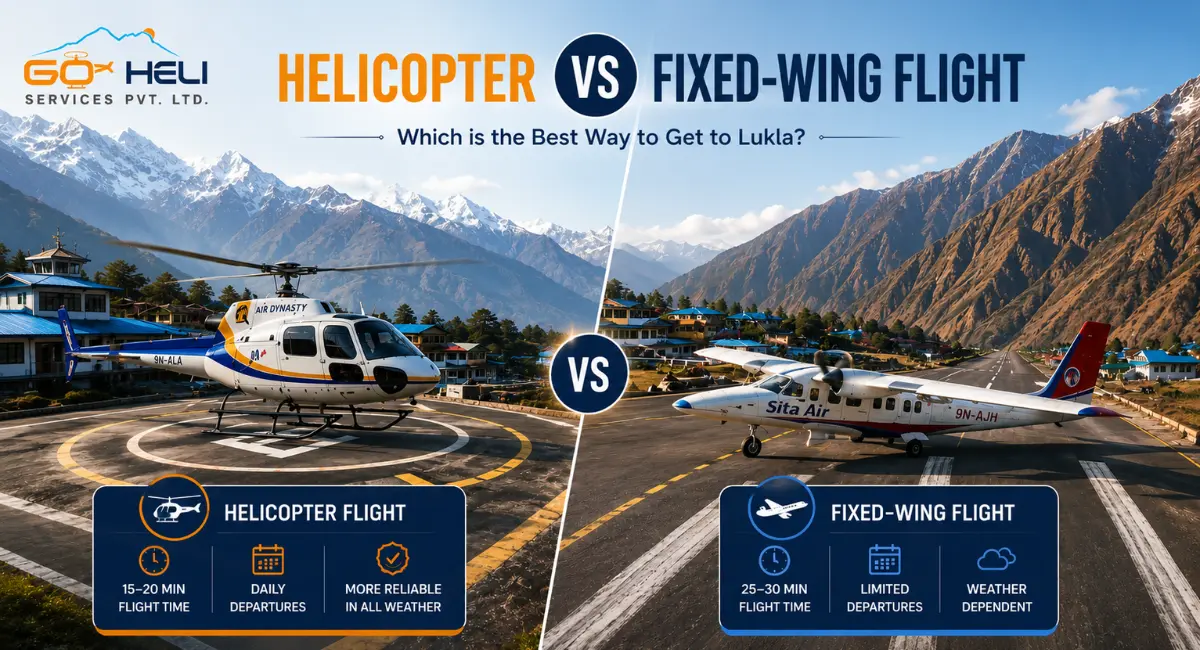
Bottom line: Helicopter wins on reliability, flexibility, and total journey time. Fixed-wing wins on price. There is no option that wins on both.
When Should You Take a Helicopter to Lukla?
You are on a tight schedule. If your international flight lands in Kathmandu and you need to be in Lukla the same morning, a helicopter is the only reliable option. Fixed-wing flights can be delayed by hours or days. Helicopter departures operate on your timeline.
You are traveling in a group of 3-5. A private charter for 3 people costs $833 per person. A shared helicopter for the same group costs $575 each. The difference is $258 per person for exclusive use, flexible timing, and guaranteed seating together. Most groups make this calculation and upgrade.
It is peak season (October-November or March-May). During these months, fixed-wing flights operate from Ramechhap. The 4 AM bus, the basic waiting area, the risk of cancellation — a helicopter bypasses all of it. You depart from Kathmandu at 6 AM and land in Lukla before 7 AM.
The weather forecast is uncertain. If clouds or wind are forecast for Lukla in the afternoon, book a morning helicopter. Helicopters operate in weather windows that ground fixed-wing aircraft. Our operations team reads the valley conditions at 5 AM and makes the call — you get a real-time decision, not a forecast gamble.
You are traveling with elderly family members or anyone with mobility concerns. The Ramechhap bus alone can be physically demanding. A helicopter is direct, comfortable, and fast.
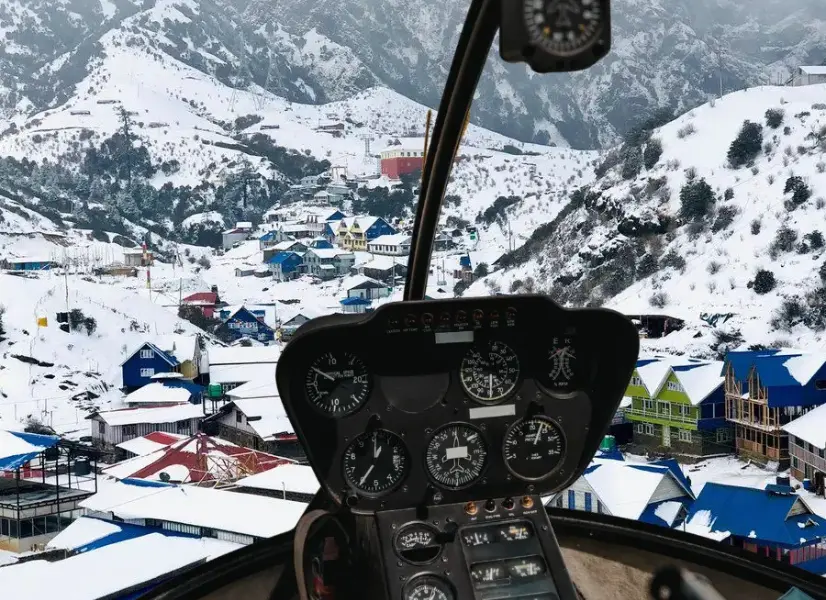
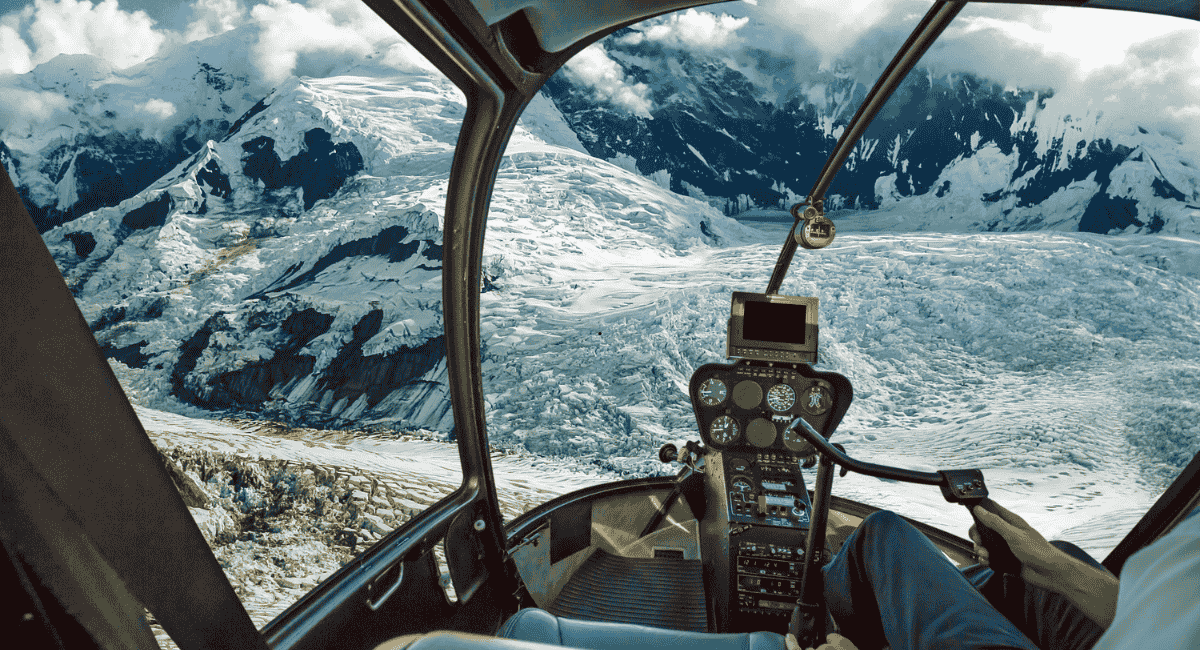
You want the scenic experience. A helicopter offers panoramic views — every seat has full window access. The flight follows the Dudh Koshi River valley past settlements, forests, and eventually the first views of the Himalayan range. Fixed-wing passengers see the mountains from a porthole window on one side. Helicopter passengers see everything.
Ready to book your helicopter to Lukla? Contact Go Heli Services on WhatsApp — we confirm availability within 2-4 hours. Most morning departures are available if booked 48 hours in advance.
Bottom line: If reliability, time, or comfort is your priority over the lowest possible price, helicopter is the smarter choice.
How Do I Book a Helicopter to Lukla?
Step 1 — Choose shared or private. Shared is best for solo travelers and pairs. Private is best for groups of 3+ or anyone who values flexibility.
Step 2 — Contact Go Heli Services with your date and group size. We check availability with our partner operators — Air Dynasty, Altitude Air, Fishtail Air, Simrik Air, Kailash Helicopter — and confirm within 2-4 hours.
Step 3 — Secure with a 50% deposit. Balance is due 7 days before departure. We accept Visa, Mastercard, Amex, bank transfer, and online payment.
Step 4 — Pre-flight briefing. The evening before your flight, we confirm your reporting time and helipad location (hotel pickup included), weather forecast for the morning, weight check and baggage limit of 15 kg per person, and a medical declaration form.
Step 5 — Fly. Departure between 6 AM and 7 AM. 45-50 minutes to Lukla. You land at Tenzing-Hillary Airport and begin your Everest trek the same morning.
Bottom line: Booking takes 10 minutes online. The hardest part is deciding which date works for your itinerary.
Frequently Asked Questions
How long does it take to fly from Kathmandu to Lukla by helicopter? 45-50 minutes. The flight follows the Dudh Koshi River valley east from Kathmandu, past the foothills, and into the Khumbu region. It is shorter than a fixed-wing flight from Kathmandu but longer than a fixed-wing flight from Ramechhap — and there is no bus ride before it.
Can helicopters fly when regular Lukla flights are cancelled? Yes, in most cases. Helicopters require 1 km visibility to operate at Lukla. Fixed-wing aircraft require 5 km. This fundamental difference means helicopters fly through conditions that ground planes. On peak season days when afternoon winds close the runway to fixed-wing traffic, helicopters continue operating.
Why do Lukla flights get cancelled so often? Lukla Airport operates under Visual Flight Rules only. The pilot must see the runway to land. Clouds, fog, wind, and low visibility all force cancellations. The 527-meter runway on a slope leaves no margin for error. In peak spring 2026, afternoon fixed-wing flights had roughly a 40% cancellation rate on windy days.
Is the helicopter ride to Lukla safe? Yes. Our partner operators are certified by the Civil Aviation Authority of Nepal (CAAN). Pilots hold high-altitude mountain flying certifications with minimum 1,000 hours of Khumbu region experience. Aircraft undergo daily maintenance checks. Flights are weather-dependent — if conditions are unsafe, we do not fly.
What helicopter model do you use for the Kathmandu-Lukla route? We primarily use the Airbus H125 (AS350 B3e), a single-engine helicopter optimized for high-altitude operations. It carries 5 passengers plus the pilot. For larger groups, we use the Bell 407, which seats 4-5 passengers with a wider cabin.
What is the baggage allowance on a helicopter to Lukla? 15 kg per person, including your daypack. Excess baggage is charged at $5/kg if space permits. On busy days, excess bags may be left behind entirely — pack within the limit. Fixed-wing flights have the same 15 kg limit.
Can I fly directly from Kathmandu to Lukla by helicopter year-round? Yes. Helicopters depart from Tribhuvan International Airport in Kathmandu year-round. Unlike fixed-wing flights, helicopters are not diverted to Ramechhap during peak season. This is the single biggest advantage of choosing a helicopter.
How much does a helicopter from Kathmandu to Lukla cost? $500 to $650 per person on a shared flight, depending on the number of passengers. Private charter costs $2,500 to $3,500 for the whole helicopter (up to 5 passengers). At 3+ passengers, private charter per-person cost drops to $833 or less — close to the shared rate.
What is the cheapest way to get to Lukla? A fixed-wing flight from Ramechhap at $180-200 per person. But this requires a 4-5 hour bus ride starting at 2 AM. A fixed-wing flight from Kathmandu at $190-220 is more convenient but cancels more frequently. A helicopter at $500-650 is the most expensive per ticket but the cheapest in time spent.
What is the fastest way to reach Lukla from Kathmandu? Helicopter. 45-50 minutes direct from Kathmandu with no bus transfer, no Ramechhap, and no waiting for weather clearance.
How early should I book a helicopter to Lukla for peak season? At least 4-6 weeks ahead for October, November, March, April, and May departures. During these months, both shared and private slots fill up. Last-minute bookings within 1 week depend on cancellations.
Can I book a shared helicopter to Lukla as a solo traveler? Yes. We coordinate group departures throughout the trekking season. If we have other travelers booked for the same date, you share the cost. If not, you can either wait for a group to form or upgrade to a private charter.
Do you offer Lukla round-trip helicopter discounts? Yes. A round-trip helicopter booking — Kathmandu to Lukla and Lukla to Kathmandu — saves approximately 15% compared to booking two one-way flights separately. This is popular for trekkers who fly in and want a guaranteed return after their EBC trek.
What happens if weather cancels my helicopter flight to Lukla? Full refund within 48 hours, no questions asked. We also rebook at no charge for weather cancellations — if the next day looks clear, your booking moves automatically.
Is there a weight limit for the helicopter ride to Lukla? Yes. Maximum total passenger weight on the AS350 B3e at Lukla elevation is approximately 200 kg. All passengers and bags are weighed during check-in. Passengers over 100 kg should inform us at the time of booking so we can plan the flight rotation accordingly.
Bottom line: 15 commonly asked questions, all answered with specific numbers and operational facts — not generic reassurances.
Which Option Should You Choose for Your Everest Trek?
If your priority is lowest cost and you have 2-3 buffer days built into your itinerary, book a fixed-wing flight from Kathmandu or Ramechhap. It is the standard way to reach Lukla and works if you can absorb delays.
If your priority is reliability, time savings, or comfort — or if you are traveling in a group of 3 or more — book a helicopter. You save a full travel day, avoid the Ramechhap bus, and arrive in Lukla ready to start your trek, not recover from the journey to get there.
Still not sure which option fits your trip? Send us your travel dates and group size — we will recommend the best option within 2 hours. No obligation, no pressure.
Book a helicopter to Lukla with Go Heli Services: - WhatsApp: +977 9851434266 - Email: info@goheliservices.com - Website: goheliservices.com
By Ram Khadka, Go Heli Services Ram coordinates helicopter operations across Nepal’s mountain regions and has personally overseen hundreds of Everest sector flights. He manages daily flight scheduling, weather assessments, and passenger coordination for Kathmandu-Lukla helicopter transfers.
Helicopter Tour