

Key Takeaways
Verify CAAN certification — Never book an operator without a valid Air Operator Certificate (AOC) from Nepal’s Civil Aviation Authority of Nepal.
Prioritize Himalayan flying hours — Look for pilots with 1,000+ hours of dedicated mountain flying, not just total flight hours.
Compare total package cost — The cheapest headline price often excludes permits, landing fees, taxes, and transfers.
Read reviews strategically — Check Google Reviews, TripAdvisor, and travel forums for patterns across multiple platforms, not isolated complaints.
Introduction
Nepal welcomed over 1.15 million international visitors in 2025, and helicopter tourism is one of the fastest-growing segments of the country’s travel industry (Nepal Tourism Board, 2026). With more than 40 helicopter operators now registered with the Civil Aviation Authority of Nepal (CAAN), travelers face a difficult question: how to choose the best helicopter company in Nepal for their Himalayan adventure.
Whether you are planning an Everest Base Camp helicopter tour, a Muktinath pilgrimage flight, or a private helicopter charter across the Himalayas, the company you select directly affects your safety, comfort, and overall experience. The stakes are high because Himalayan flying involves high-altitude landings above 5,000 meters, rapidly changing weather, and challenging mountain terrain.
This complete guide breaks down every factor you need to evaluate before booking your helicopter tour in Nepal. Use these criteria to make a confident, informed decision.
Why Choosing the Right Helicopter Company Matters
Helicopter flights in Nepal are fundamentally different from standard aviation. Mountain flying presents unique challenges.
Altitude plays a major role because landings at Everest Base Camp (5,364m) and Kala Patthar (5,545m) require specialized aircraft and pilot training.
Weather conditions can shift from clear skies to zero visibility within minutes, particularly during spring and autumn seasons.
Terrain in mountain regions is highly challenging because many landing sites are unprepared surfaces with limited approach and departure paths.
Weight restrictions are also critical because high-altitude operations require strict weight calculations that directly affect passenger capacity and safety.
According to CAAN, helicopter operations in Nepal have grown significantly in recent years. Following a helicopter incident in the Everest region in October 2025, CAAN Safety Circular 12/2025 mandated stricter protocols for winter operations and high-altitude operations, including bans on flying in whiteout or foggy conditions and requirements for snow-cleared helipads.
The difference between a well-run helicopter operation and a low-cost operator can determine whether your experience is safe and memorable or stressful and risky. That is why careful research before booking is extremely important.
Safety Standards and CAAN Certification
Safety is the single most important factor when choosing a helicopter company in Nepal. Every legitimate operator must hold a valid Air Operator Certificate (AOC) issued by the Civil Aviation Authority of Nepal.
Before booking, travelers should verify whether the company has a valid AOC from CAAN because this confirms the operator meets minimum aviation safety and operational standards.
Aircraft maintenance records are equally important. Well-maintained helicopters undergo inspections every 100 flight hours at CAAN-approved maintenance facilities.
Travelers should also review the company’s safety history because transparent operators openly share their safety record and operational standards.
Passenger liability insurance is another critical factor because it protects travelers financially in the unlikely event of an incident.
Government authorization confirms the company is legally approved for commercial passenger flights in Nepal.
There are several red flags travelers should avoid. Companies unwilling to provide CAAN certificate details, vague answers regarding maintenance schedules, or unclear insurance coverage should be approached carefully.
Similarly, operators promising guaranteed flights regardless of weather conditions are usually prioritizing profits over passenger safety.
Pilot Experience in Himalayan Conditions
Mountain flying in Nepal requires skills that standard commercial pilot training does not fully cover. High-altitude takeoffs and landings, valley navigation, cloud reading in mountainous terrain, and landing on unprepared mountain surfaces all demand specialized experience.
One of the most important things to evaluate is Himalayan flight hours. A pilot with 5,000 total flying hours but only 200 hours in Himalayan conditions is far less experienced than a pilot with 2,000 hours dedicated specifically to mountain flying in Nepal.
Travelers should ask whether pilots regularly fly routes such as Everest, Annapurna, Muktinath, and Langtang because route familiarity helps pilots understand local weather patterns, wind conditions, and landing site characteristics.
Type rating is equally important. Pilots should be certified for the specific helicopter model used for your flight, whether it is an Airbus H125, Bell 407, or another aircraft.
Fleet Quality and Helicopter Maintenance
The condition and quality of helicopters operated by a company say a great deal about their commitment to safety and service standards.
Several helicopter models are commonly used for Himalayan flights in Nepal.
- The Airbus H125 (AS350 B3e) is widely preferred for high-altitude operations such as Everest helicopter tours and Annapurna helicopter tours because of its strong engine performance and reliability.
- The Bell 407 is commonly used for medium-altitude tours, including Muktinath flights and Langtang flights.
- The Robinson R44 is mostly used for short sightseeing flights at lower altitudes.
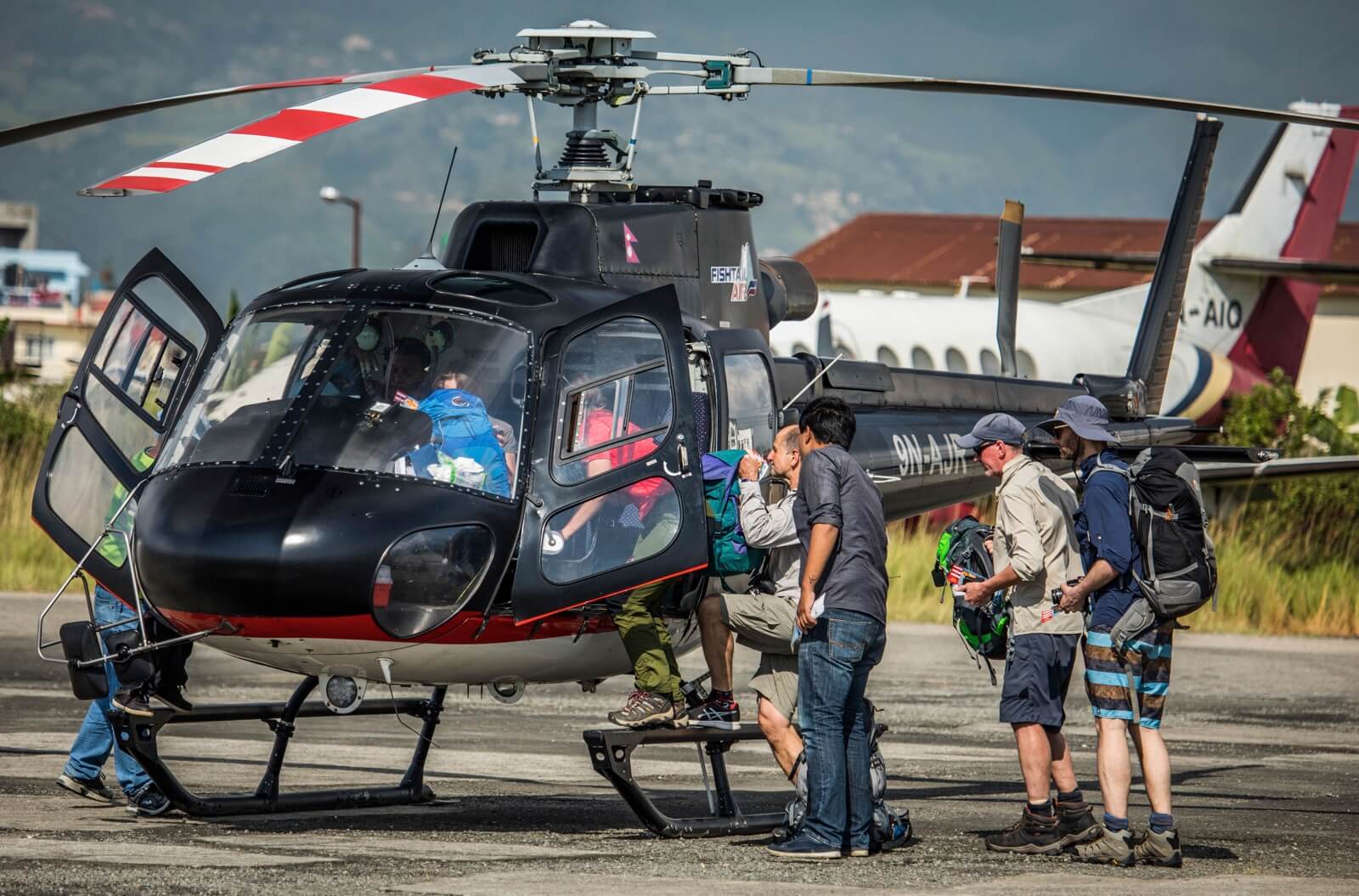
Travelers should evaluate the age and maintenance condition of the aircraft before booking. Newer helicopters generally include better navigation systems and upgraded safety technology, although older helicopters can also remain highly reliable when maintained correctly.
High-altitude capability is another essential factor because not all helicopters can safely operate near Everest Base Camp altitude.
It is also recommended to confirm whether the operator uses CAAN-certified maintenance facilities for inspections and repairs.
Companies that maintain clean and professionally presented helicopters usually apply the same level of attention to technical maintenance and safety procedures.
Customer Reviews and Reputation
Online reviews provide valuable insight into the quality and reliability of a helicopter company in Nepal.
Travelers should carefully review recent Google Reviews because they often contain detailed information about customer experiences, pilot professionalism, punctuality, and service quality.
TripAdvisor is another useful platform, especially when reviewing both positive reviews and negative reviews to identify patterns.
Travel forums and travel communities such as Reddit discussions about Nepal tourism can also provide genuine traveler opinions and recommendations.
Local trekking agencies and hotels often recommend trusted helicopter companies based on years of collaboration and operational experience.
When analyzing reviews, travelers should focus on review patterns rather than isolated complaints. A few negative reviews are normal, especially regarding weather delays or refund situations.
Positive indicators include detailed customer feedback, traveler photos, consistent praise for communication, and positive experiences across multiple platforms.
Red flags include repeated safety complaints, maintenance concerns, hidden pricing issues, or reviews that appear generic and artificial.
Pricing Transparency and Hidden Costs
Pricing for helicopter tours in Nepal varies depending on destination, season, group size, and package inclusions. The cheapest option is not always the best value.
Shared Everest Base Camp helicopter tours generally cost between $1,000 and $1,500 per person, while private charters typically range between $4,500 and $6,000.
Muktinath helicopter tours usually cost between $800 and $1,200 for shared flights, while private charters range from $3,500 to $5,000.
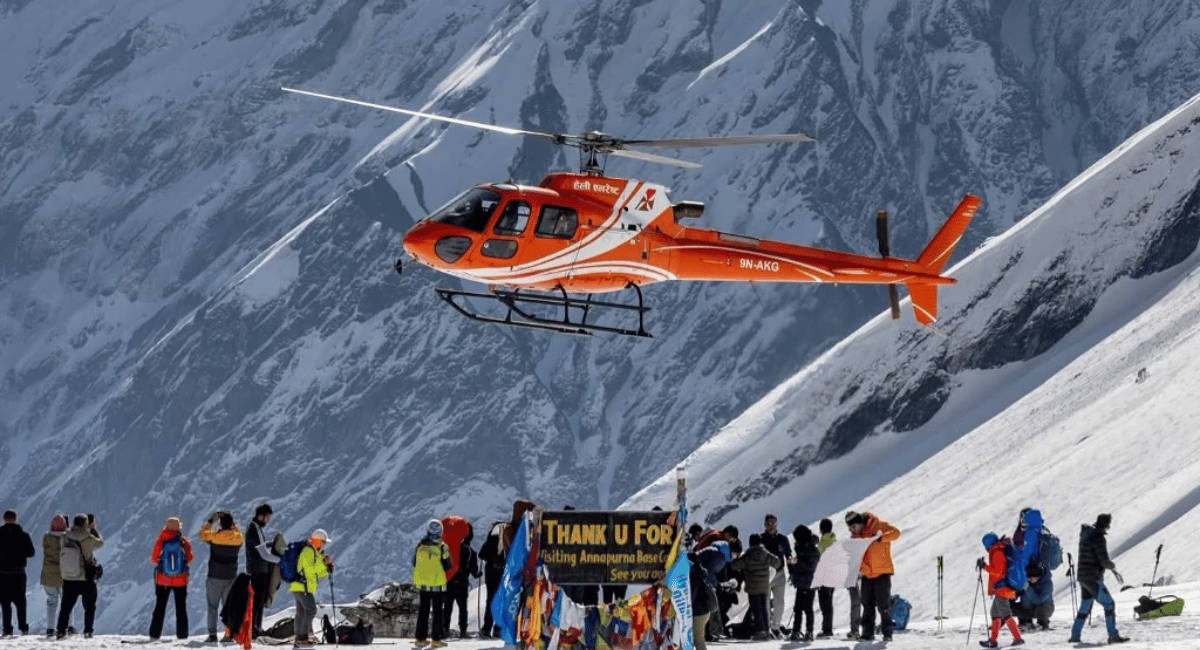
Annapurna helicopter tours generally cost between $700 and $1,000 for shared packages.
Before booking, travelers should ask whether national park permits, landing fees, airport taxes, hotel transfers, and government charges are included in the quoted price.
Travelers should also understand the company’s cancellation and refund policies for weather-related delays.
Additional questions should include luggage weight restrictions, extra baggage fees, and required deposit amounts.
Go Heli Service provides transparent pricing with detailed cost breakdowns before booking confirmation. Customers receive itemized invoices clearly listing permits, taxes, landing fees, and optional services.
Tour Package Inclusions
Different helicopter companies offer different package inclusions even for the same destination. Comparing package details carefully helps travelers understand the real value of each offer.
A premium helicopter package generally includes round-trip helicopter flights, scenic landings at key viewpoints, national park permits, hotel transfers, breakfast or refreshments, and professional pilot guidance.
Many premium Everest helicopter tours include landings near Kala Patthar or Everest View Hotel for panoramic mountain views.
Travelers should carefully confirm exact landing points, total flight duration, and whether weather backup plans are included.
Packages with pricing far below market averages should be approached cautiously because they may exclude important services or compromise operational quality.
Operators using vague descriptions without itemized inclusions should also be evaluated carefully before booking.
Customer Service and Communication
Customer service reflects the professionalism and reliability of a helicopter company.
Professional operators respond quickly to inquiries through email, WhatsApp, or phone calls and provide detailed information about routes, safety measures, and pricing.
Clear communication is especially important for international travelers who require support regarding permits, travel arrangements, and weather conditions.
The best companies offer flexible booking processes, multilingual communication support, and personalized travel assistance.
Go Heli Service is recognized for professional customer communication from initial inquiry to post-flight support. Their multilingual team assists travelers throughout the booking process to ensure a smooth and organized experience.
Helicopter Company Comparison Checklist
Before booking a helicopter tour in Nepal, travelers should evaluate whether the helicopter company in Nepal meets the following standards:
- The company should hold a valid CAAN Air Operator Certificate (AOC).
- Pilots should have more than 1,000 hours of Himalayan flying experience.
- The operator should provide transparent pricing with no hidden fees.
- Passenger liability insurance should be clearly available.
- The company should provide recent customer references and online reviews.
- Helicopters should be equipped for high-altitude Himalayan operations.
Operators with physical offices in Nepal and experienced local staff are generally more reliable and easier to communicate with.
Common Mistakes to Avoid When Booking a Helicopter Tour
Common mistakes travelers make when booking a helicopter tour in Nepal include booking solely based on low pricing. Cheap operators often reduce costs through limited maintenance, less experienced pilots, or reduced insurance coverage.
Another common mistake is failing to review cancellation policies carefully. Weather conditions in Nepal can change quickly, making flexible rescheduling policies very important.
Ignoring luggage and weight restrictions is another issue because high-altitude flights operate under strict weight limits.
Travelers should also avoid booking peak season helicopter tours too late because spring and autumn seasons often fill quickly.
Finally, travelers should confirm whether the package includes actual mountain landings or only scenic flyovers.
How Go Heli Service Meets Every Criterion
Go Heli Service consistently meets the standards travelers should expect from a trusted helicopter company in Nepal.
The company is CAAN-certified and operates well-maintained Airbus H125 helicopters equipped for high-altitude Himalayan operations.
Pilots possess extensive mountain flying experience with continuous emergency training and simulator training.
Pricing remains transparent with detailed invoices listing all permits, taxes, landing fees, and service charges.
Go Heli Service offers helicopter tours in Nepal to Everest Base Camp, Muktinath, Annapurna, Langtang, and custom private charter destinations across Nepal.
Customer support remains one of the company’s strongest advantages, with multilingual communication and personalized travel assistance available throughout the booking process.
Frequently Asked Questions
1) How to choose the best helicopter company in Nepal for a safe experience?
Travelers should verify CAAN certification, pilot experience, maintenance standards, insurance coverage, and customer reviews before booking any helicopter company in Nepal.
2) How much does an Everest Base Camp Helicopter Tour cost?
Shared Everest Base Camp Helicopter Tour usually cost between $1,000 and $1,500 per person, while private charters generally range from $4,500 to $6,000.
3) Are helicopter tours in Nepal safe?
Yes, helicopter tours in Nepal are safe when operated by CAAN-certified companies with experienced mountain pilots and properly maintained helicopters.
4) What is the best time for helicopter tours in Nepal?
Spring (March to May) and Autumn (September to November) offer the clearest weather and best mountain visibility for helicopter tours in Nepal.
5) What are the most popular helicopter tours in Nepal?
Popular helicopter tours in Nepal include Everest Base Camp Helicopter Tour, Muktinath Helicopter Tour, Annapurna Base Camp Helicopter Tour and Langtang Helicopter Tour.
6) Can I book a private helicopter charter in Nepal?
Yes, private helicopter charter services in Nepal are available for luxury travel, photography tours, pilgrimage tours, business travel, and mountain sightseeing.
7) Does Go Heli Service provide rescue helicopter services?
Yes, Go Heli Service provides emergency helicopter rescue and medical evacuation services across remote Himalayan trekking regions.
8) What should I check in a helicopter tour package before booking?
Travelers should verify permits, landing fees, hotel transfers, cancellation policies, pilot experience, aircraft type, and exact landing locations before booking.
Conclusion
Choosing the best helicopter company in Nepal requires careful evaluation of safety standards, pilot experience, pricing transparency, and customer service quality. By following the recommendations outlined in this guide, travelers can make informed decisions that prioritize safety while ensuring an unforgettable Himalayan experience.
Before booking any helicopter tour in Nepal, travelers should verify company credentials, compare package inclusions, read customer reviews carefully, and confirm all pricing details.
For travelers looking for a trusted helicopter company in Nepal with experienced mountain pilots, transparent pricing, strong safety standards, and comprehensive helicopter tour packages, Go Heli Service is ready to deliver a world-class Himalayan helicopter experience.
Ready to book your helicopter tour in Nepal?
Contact Go Heli Service for customized helicopter tour packages in Nepal tailored to your travel schedule, budget, and preferences.
Helicopter Tour